
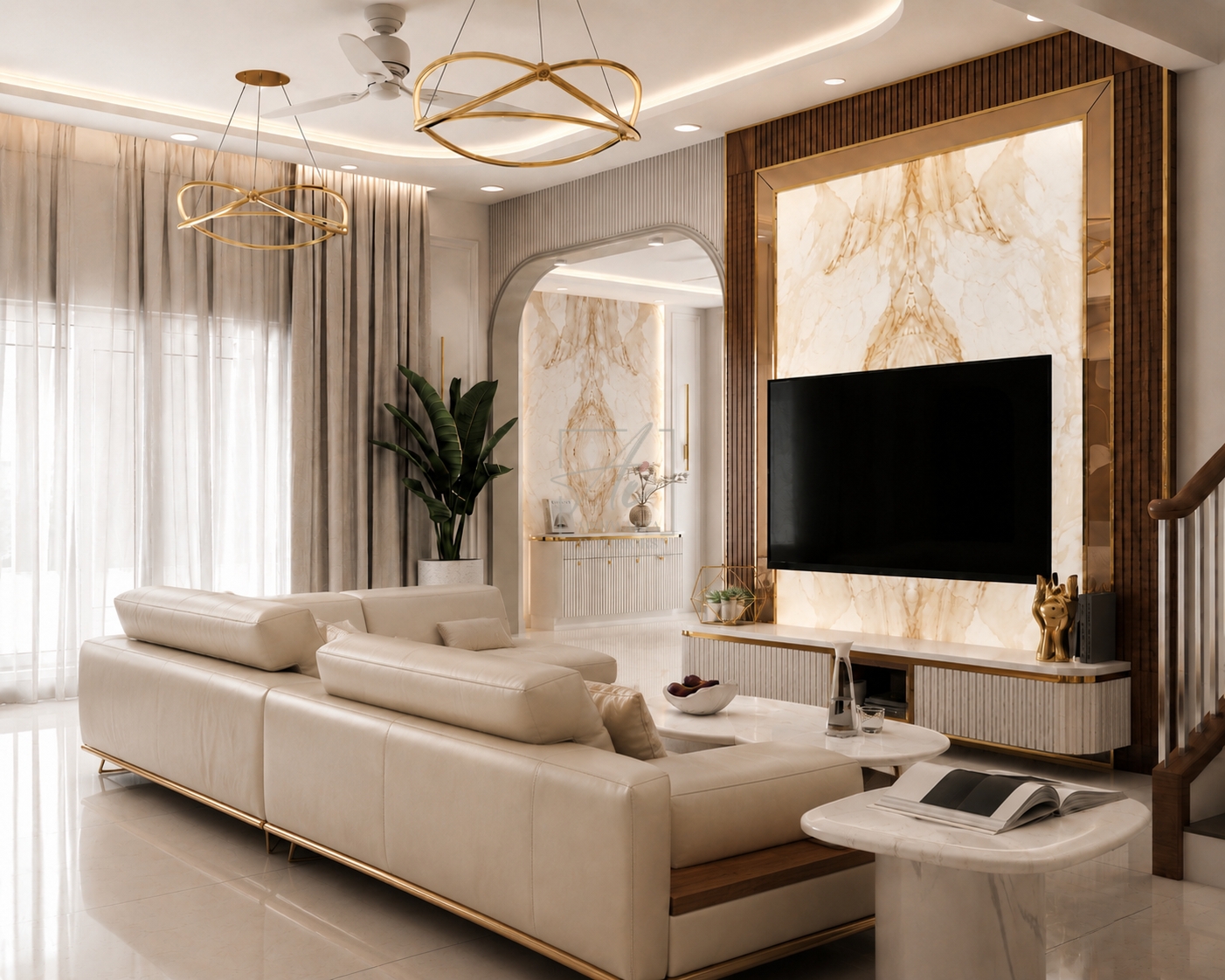
The Living Room Is Changing — And So Is What Bangalore Wants From It
For years, the living room was designed to impress. A large sofa facing a television, a bright ceiling light, and a colour palette chosen mostly because it photographed well. That’s shifting. Across Bangalore’s luxury homes, homeowners are asking for something different — a living room that feels warm, personal, and genuinely comfortable to spend time in, rather than one designed purely for guests.
At Aishwarya Interiors, we’ve spent over two decades designing homes across Bangalore, and the change we’re seeing in 2026 is less about any single trend and more about a shift in priority: from showcase spaces to spaces built around how a family actually lives. Here are the living room trends shaping that shift.
1. Curved Furniture and Softer Forms
Sharp-edged, angular furniture is giving way to rounded, organic shapes. Modular sofas in bouclé and velvet, low-profile seating with tapered wooden bases, and deep-cushioned sofas in warm, saturated tones are leading the conversation in 2026.
The appeal is both visual and practical. Curved forms soften a room, make circulation feel more natural, and work particularly well in Bangalore apartments where a rigid, boxy furniture layout can make a space feel tighter than it is. Curved and modular sofas with a relaxed, lounge-style setup are among the top picks for 2026 living rooms.
2. Warm, Earthy Colour Palettes Replacing Cool Greys
Perhaps the clearest shift of 2026 is the retreat of cool grey as a dominant palette. Cool gray has fallen out of favour, with 2026 living rooms favouring warmer tones — terracotta, sage green, warm cream, and deep jewel tones. For those who prefer neutrals, warm greige or soft mushroom tones offer a contemporary alternative. Soft browns, olive greens, and terracotta tones dominate trending living room colours for 2026, bringing warmth and calm.
In Bangalore homes — where natural light varies significantly depending on a building’s orientation — these warmer undertones tend to work with the light rather than against it, making rooms feel inviting through the day rather than flat.
3. Layered Lighting as a Design Element
A single bright ceiling fixture no longer passes as a lighting plan in a well-designed living room. The standard now is three sources minimum: ambient, accent, and task — with every source on dimmers.
In practice, this means a statement pendant or chandelier over the central seating zone acting as a visual anchor, floor lamps beside seating for warm directional light in the evenings, wall sconces or picture lights on a feature wall, and concealed LED strips in coves or behind shelving for ambient background light. Smart, layered lighting with warm tones and dimmable options is defining modern spaces.
The ability to shift a living room from bright and functional during the day to soft and relaxed in the evening is one of the more meaningful everyday upgrades in a home.
4. Textured Walls Over Flat Paint
Flat, single-tone walls are being replaced by finishes with real depth. From limewash to satin and matte paints, textured finishes are giving living rooms a handcrafted, elegant touch.
Wall panelling is another growing preference — curated wall panelling is being used not as an accessory, but as an architectural element, bringing warmth and tactility to rooms that would otherwise feel visually flat.
5. Zoning Within Open-Plan Layouts
Open-plan living remains popular in Bangalore, but with an important refinement. Open-concept layouts remain popular, but with increased emphasis on defining zones within the space — layered rugs, strategic furniture placement, and varied lighting layers help create distinct areas while maintaining the airy, connected feel that makes open concepts appealing. Subtle zoning using rugs, partitions, or shelves creates better flow
— which matters especially in apartments, where one shared space has to serve conversation, television, work, and hosting without feeling chaotic.
6. Dark Wood Making a Return
Pale, bleached wood is losing ground. In 2026, dark wood furniture has made a commanding return, bringing warmth, sophistication, and architectural gravitas to the living room. Richer walnut and mahogany tones are increasingly replacing lighter wood accents, particularly in living rooms aiming for a more grounded, established feel rather than a bright, airy one.
7. Natural Materials and Biophilic Touches
Rattan furniture, recycled wood, and jute rugs are all part of the eco-conscious living room look, with indoor plants and large windows bringing freshness and balance to the home.
For Bangalore in particular — a city that still enjoys a genuinely pleasant climate for much of the year — living rooms that open toward balconies, greenery, or natural light work especially well, and this trend leans naturally into that advantage.
8. Curation Over Accumulation
Perhaps the most important underlying shift isn’t a material or a colour at all — it’s a philosophy. There is a clear move towards spaces that contain fewer pieces, each chosen with far greater deliberation — a philosophy of curation over accumulation.
This is the thinking behind what many now call quiet luxury: rooms that feel rich because of material quality and thoughtful restraint, not because every surface has been filled. A well-chosen rug ties all the furniture together, while the wrong one makes a room feel disjointed — a small example of how much a single considered decision can shape an entire space.
9. Statement Feature Walls
Rather than decorating every wall, many Bangalore living rooms in 2026 are being designed around a single anchor. A full-height, custom-built composition integrating the screen, storage, and display niches into one cohesive architectural element is increasingly replacing the standard TV unit — turning what was once a piece of furniture into part of the room’s architecture.
10. Rooms Designed for How Families Actually Live
Underlying every trend above is a bigger change in mindset. Indian homeowners are moving from showcase homes — designed to impress visitors — to sanctuary homes, designed for daily wellbeing, comfort, and personal expression. A successful living room isn’t built around trends alone, but around the way a family actually lives, hosts, relaxes, and uses the space every day.
That’s the principle worth holding onto as you consider anything else on this list.
Bringing It All Together
Trends are useful as a starting point, not a checklist. The living rooms that will still feel right in five years are the ones where a handful of these ideas — warm materials, layered light, thoughtful zoning, restraint — are applied in service of a specific family’s life, rather than adopted wholesale.
That’s exactly how we approach every project at Aishwarya Interiors — award-winning luxury interiors across Bangalore, where every room is designed around the people who’ll live in it, not around a trend board.
Planning a living room redesign in Bangalore? Get in touch with Aishwarya Interiors for a personalised design consultation.