
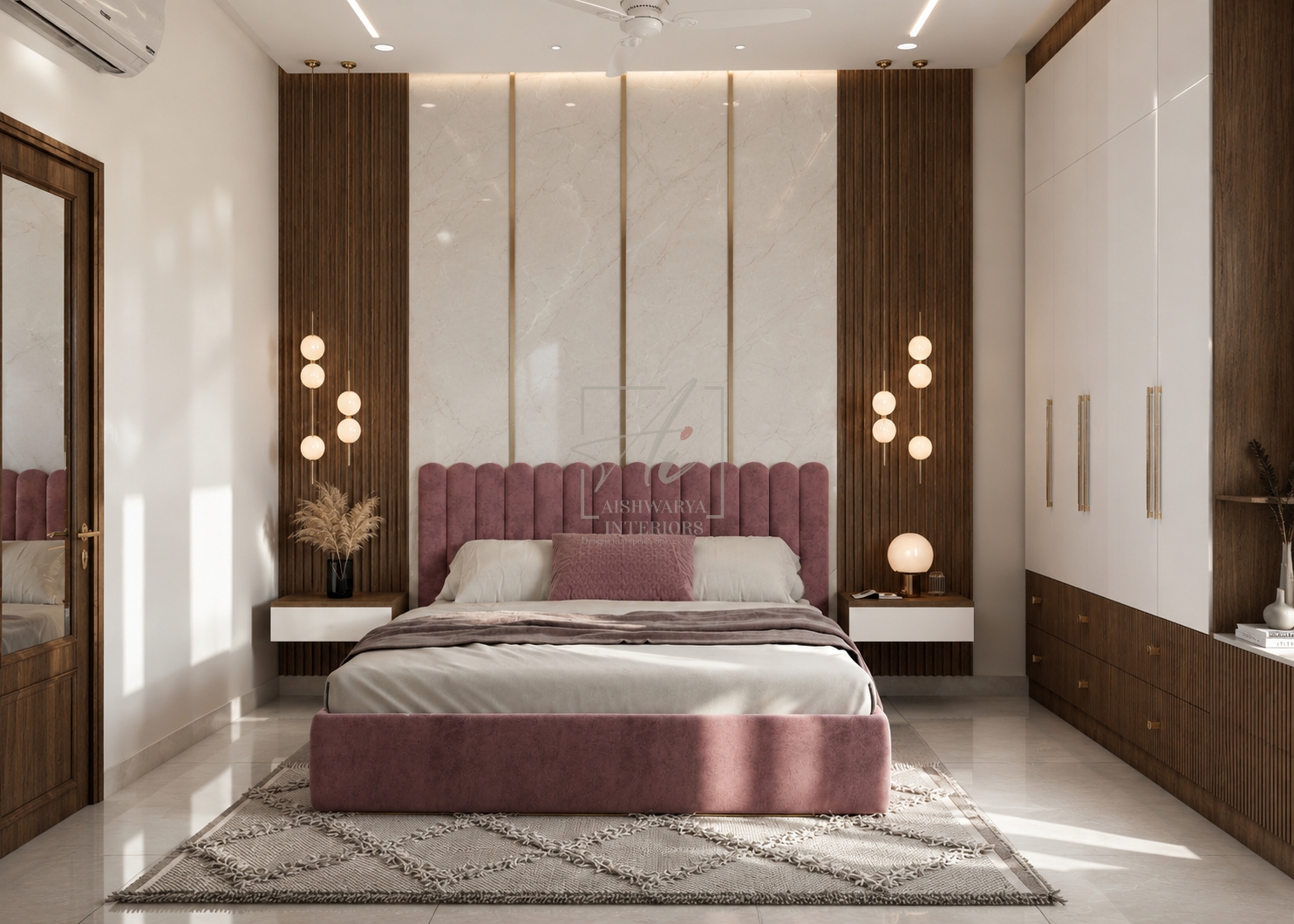
Luxury and Pets Can Share the Same Home
There’s a long-standing assumption that a beautifully designed home and a pet simply can’t coexist. Light upholstery gets scratched, polished floors pick up paw marks, and the carefully styled living room ends up covered in fur. So homeowners often choose one or the other: a home that looks flawless, or a home that’s comfortable for the family’s four-legged member.
It doesn’t have to be a trade-off. At Aishwarya Interiors, we’ve spent over two decades designing luxury homes across Bangalore, and more and more of our clients now share their homes with dogs, cats, or both. When pets are considered at the start of the design process rather than after the fact, a home can look refined and still stand up to daily life with them.
Start With How Your Pet Actually Lives
Good pet-friendly design begins with observation. A large, energetic dog has very different needs from a pair of indoor cats, and a home designed for one won’t necessarily suit the other. A few questions shape almost every decision that follows:
- Which areas does your pet use most? Pets tend to claim a favourite sunny spot or a corner near the family, and that’s where wear shows up first.
- Does your pet scratch, climb, or chew? Cats and dogs damage different surfaces in different ways.
- How much time does your pet spend outdoors? Access to a garden, terrace, or balcony changes how much dirt and moisture comes inside.
- Does anyone in the household have allergies? This affects fabric, flooring, and ventilation choices.
Designing around real habits, rather than a generic idea of “pet-friendly,” is what makes the result work.
Flooring: The Most Important Decision
Flooring takes more punishment from pets than any other surface, so it’s usually the best place to start.
Large-format porcelain and quality vitrified tiles are among the most practical choices. They resist scratches and stains, clean easily, and come in finishes that mimic natural stone or wood convincingly. A matte or lightly textured surface also gives paws better grip than a high-gloss one, which matters for older pets and energetic dogs on slippery floors.
Natural stone such as honed granite or certain marbles can work well, but softer, more porous stones may stain or etch over time, so the choice needs care.
Engineered wood with a hard, durable finish can be suitable in lower-traffic rooms like bedrooms, though solid wood in busy areas can show scratches sooner.
A good rule of thumb is to keep the toughest flooring in the zones your pet uses most and save more delicate materials for spaces they rarely enter.
Upholstery and Fabrics That Hold Up
Fabric choices make a visible difference. Tightly woven materials such as performance fabrics, treated linens, and certain microfibres resist snagging and are easier to clean than loosely woven or heavily textured fabrics like bouclé, which claws catch on easily. Leather and quality faux leather are also practical, wiping clean quickly, though they can scratch and are worth considering carefully for homes with cats.
Colour matters too. Mid-tone, slightly textured shades such as warm taupe, soft olive, or muted clay tend to disguise fur and light marks far better than pure white or deep black, and they sit comfortably within the earthy palettes currently popular in Bangalore homes. Removable, washable covers on key seating are a simple, practical addition.
Built-In Solutions That Look Intentional
The most elegant pet-friendly homes don’t look pet-proofed; they look designed. Built-in solutions are the main reason why:
A dedicated feeding station integrated into kitchen or utility cabinetry keeps bowls tidy and off the floor, with a pull-out drawer for food storage nearby.
A custom pet bed nook built into a staircase base, a wardrobe niche, or a bench gives your pet a defined, comfortable place that matches the rest of the joinery rather than a store-bought bed in the middle of the room.
A grooming or wash area in a utility space or terrace, with a low-level tap and easy-clean tiling, saves a lot of mess indoors, especially for larger dogs.
Concealed storage for leashes, toys, and supplies keeps the living areas clutter-free.
Because these features are designed as part of the home’s woodwork, they blend in rather than interrupting the look of the room.
Protecting Walls and Furniture
Pets inevitably brush against walls, and cats in particular scratch. A few design choices help here. Washable, scrubbable paint finishes in high-traffic areas make marks easy to remove, and wall panelling or wainscoting along lower walls gives practical protection while adding architectural interest. For cats, giving them somewhere appropriate to scratch, such as a built-in scratching post or a sturdy, designated piece, tends to protect everything else more effectively than trying to discourage the behaviour altogether.
Furniture with raised legs or a slightly elevated base is also easier to clean beneath, which helps with both fur and hygiene.
Safety and Comfort Details
A pet-friendly home is also a safe one. Secure balcony railings or discreet netting, cable management that keeps wires out of reach, and a considered choice of indoor plants (since some common houseplants are harmful to pets) all deserve attention. Good ventilation helps with both odour and allergens, and ample natural light and cool, comfortable resting spots matter in Bangalore’s warmer months, especially for breeds that struggle in the heat.
Outdoor and Terrace Spaces
For homes with a garden, terrace, or balcony, outdoor areas are an extension of a pet’s living space. Durable, non-slip, easy-to-clean outdoor flooring, shaded rest areas, and secure boundaries make these spaces enjoyable for everyone. In villas, a defined play or relaxation zone keeps muddy paws away from the main living areas while giving pets room to be active.
Common Mistakes to Avoid
A few patterns show up repeatedly in homes that struggle with pets. Choosing delicate or heavily textured fabrics for the main seating is one of the most common. High-gloss flooring that looks stunning but proves slippery and easy to scratch is another. And treating pet needs as an afterthought, rather than planning storage, feeding areas, and resting spots from the start, often leaves a home feeling cluttered despite good intentions.
Bringing It All Together
A pet-friendly home doesn’t need to look like one. With durable flooring, resilient fabrics, thoughtful built-in features, and an honest look at how your pet actually lives, a luxury interior can be both beautiful and genuinely comfortable for every member of the family, on two legs or four.
That balance of beauty and practicality is how we approach every project at Aishwarya Interiors: award-winning luxury interiors across Bangalore, designed around the way real families live, pets included.
Planning a pet-friendly luxury home in Bangalore? Get in touch with Aishwarya Interiors for a personalised design consultation.